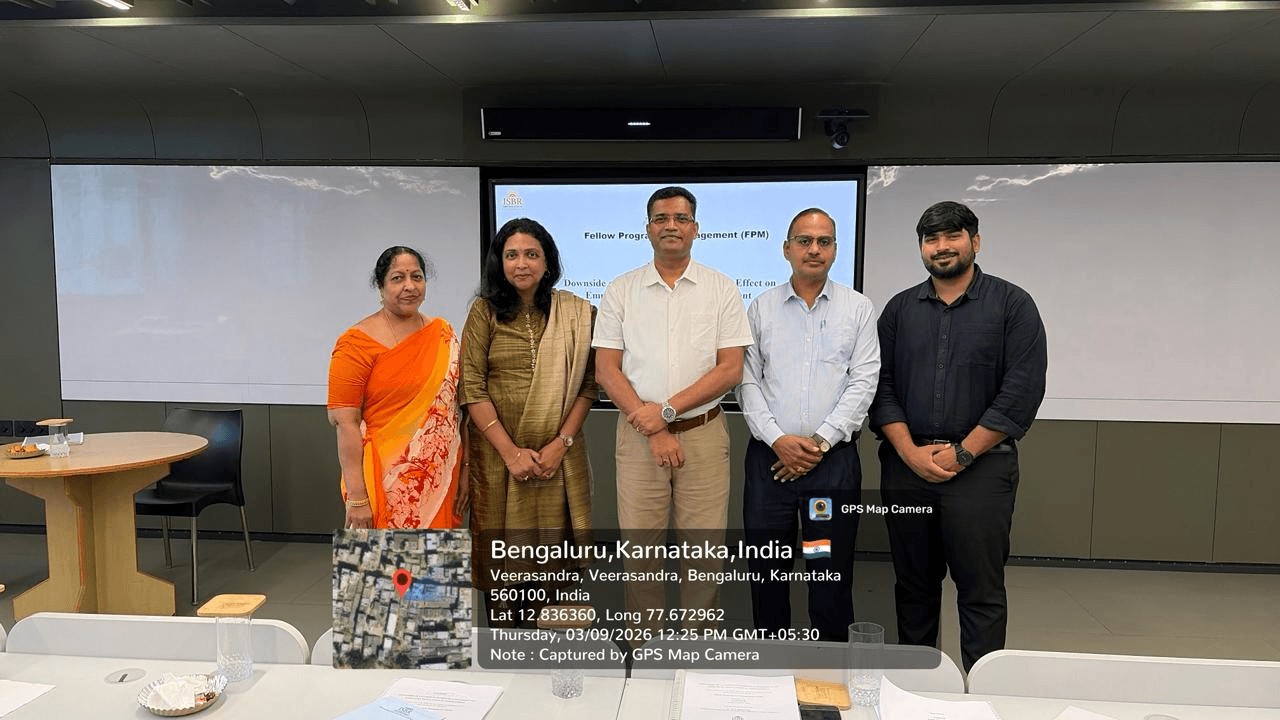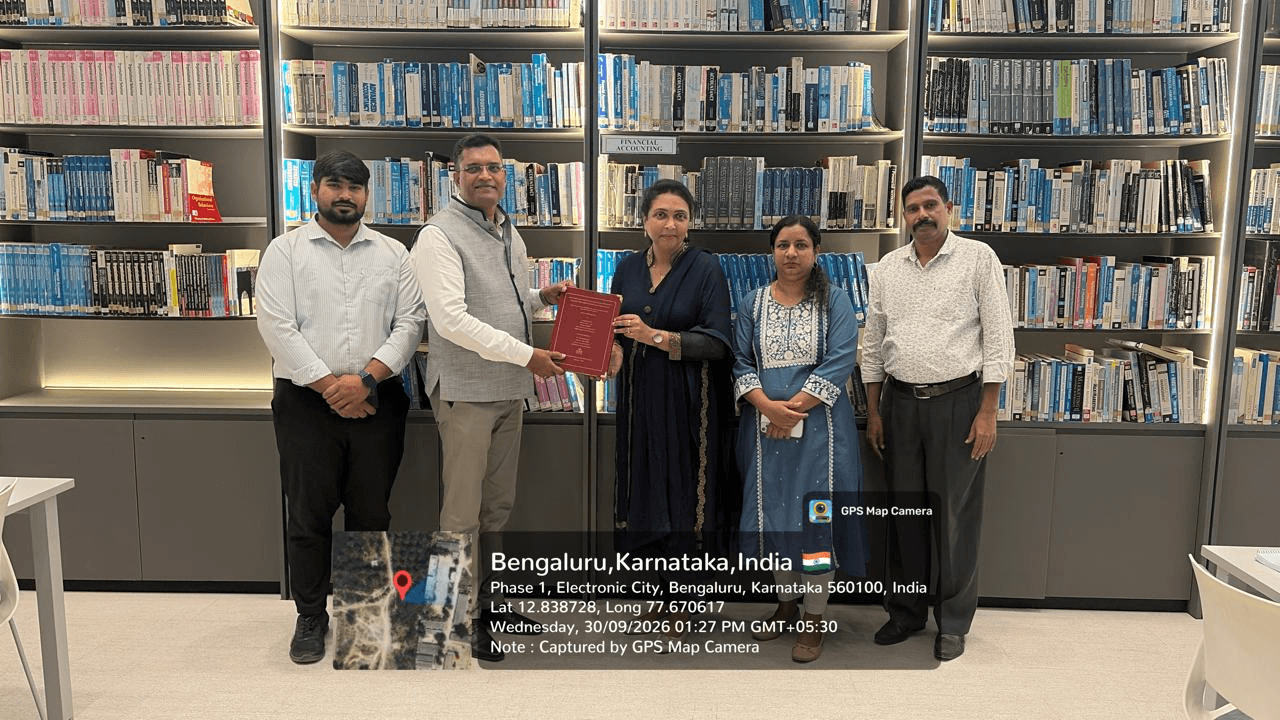



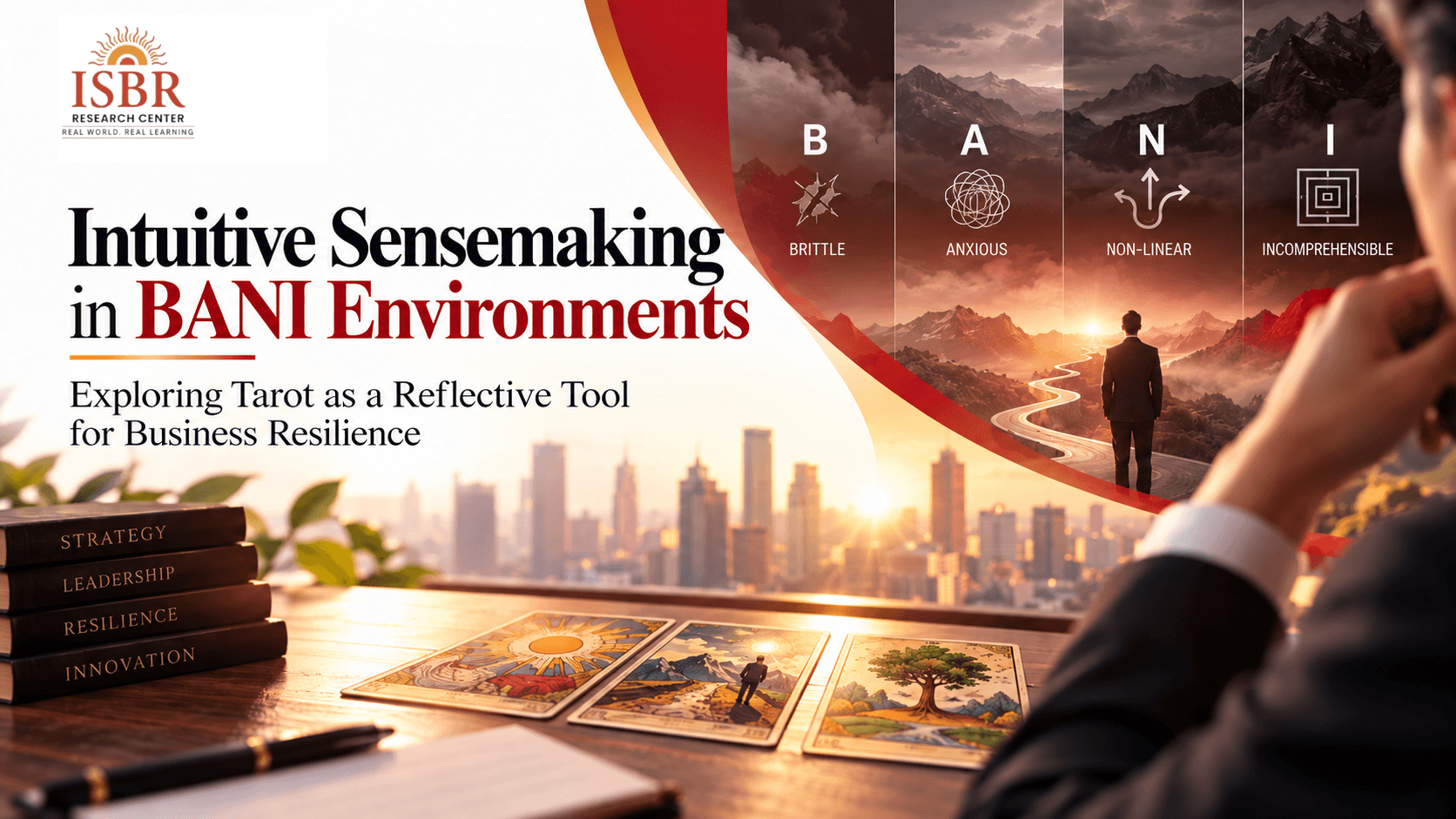
BENGALURU — As global enterprises encounter unprecedented volatility characterized by Brittle, Anxious, Non-linear, and Incomprehensible (BANI) market dynamics, relying solely on linear analytical models can leave leadership vulnerable to strategic blind spots. A study authored by Anuradha Shukla (FPM Scholar, ISBR Business School) and Dr. Preshth Bhardwaj (Professor, ISBR Business School), published in the EPH-International Journal of Business & Management Science, investigates how Tarot and intuitive reflective practices can supplement traditional decision-making frameworks to build cognitive adaptability and organizational resilience.
Research Publication Overview
| Parameter | Details |
| Paper Title | LEVERAGING TAROT FOR ENHANCING BUSINESS RESILIENCE IN A BANI ENVIRONMENT |
| Authors | Anuradha Shukla (FPM Scholar) & Dr. Preshth Bhardwaj (Professor) |
| Institution | ISBR Business School, Bengaluru, Karnataka, India |
| Journal | EPH-International Journal of Business & Management Science |
| DOI / Citation | https://doi.org/10.69980/rh7abn97 |
| Article URL | https://eijbms.com/index.php/ms/article/view/464 |
| Methodology | Mixed-methods exploratory survey ($n = 36$ business/management professionals) |
| Key Domains | BANI Environment, Intuition, Reflective Practice, Business Resilience, Leadership, Strategic Decision-Making |
Key Findings & Research Highlights
1. Low Organizational Readiness for BANI Dynamics
The study reveals that only 25% of respondents felt their organizations were adequately prepared to handle a BANI environment. This gap emphasizes the necessity of expanding leadership toolkits beyond standard forecasting methods to navigate ambiguity and systemic anxiety.
2. High Acceptance vs. Low Engagement in Intuitive Practices
- Recognition of Intuition: 91.7% of participants acknowledged intuition as a vital source of strategic decision-making.
- Active Practice Gap: Despite high endorsement, only 36.1% actively engaged in intuitive or reflective practices such as Tarot, journaling, or meditation.
3. Openness to Tarot as a Reflective Business Tool
- 33.3% of respondents stated they would consider Tarot in business contexts.
- 52.8% expressed mild openness (“open to it, but only a little”).
- 13.9% would not consider it.
4. Tarot as a Cognitive Framework, Not Outcome Prediction
Participants viewed Tarot not as a predictive device, but as a structured tool for reflection, ideation, gaining clarity, and examining alternative viewpoints. Rather than replacing analytical rigor, intuitive reflection serves to supplement logic when confronting ambiguous choices.
Practical Implications & Academic Value
- Reflective Leadership: Executive leaders can employ reflective instruments to question existing assumptions, reframe complex challenges, and reduce paralysis by analysis during crises.
- Emerging Academic Frontier: By probing the intersection of intuitive practices, adaptive thinking, and business resilience, the research opens new avenues for exploring non-linear management techniques in modern leadership development.