



The aviation sector is a huge, multi-billion-dollar global machine that operates on absolute precision. Behind every seamless takeoff, systematically sorted baggage carousel, and perfectly timed flight schedule is a dedicated team of business-minded operational experts. If you want to step into this high-growth ecosystem straight after high school, a Bachelor of Business Administration (BBA) in Aviation Management is your best pathway.
But what does this degree actually teach you, and where should you study to maximize your professional return?
In this comprehensive post, let’s break down the definitive BBA aviation course details and showcase why selecting a premier BBA aviation college in Bangalore will completely transform your long-term career trajectory.
What Exactly is BBA Aviation Management?
Many students mistake this degree for cabin crew training or pilot preparation. It is neither. This is a corporate management degree. You are trained to run the commercial side of flight operations, not to navigate the aircraft. You will master how modern airports are structured, how airlines manage fluid ticket revenue, how massive global air cargo logistics function, and how to maintain strict national and international aviation safety regulations.
Essentially, an undergraduate BBA degree in Aviation Management is a three-year specialization course that acts as a link between business administration concepts and the practicalities of the aviation industry.
BBA General vs. BBA Aviation Management: Which is Right for You?
When choosing your undergraduate degree, the biggest dilemma is often deciding between a traditional, general BBA and a specialized, industry-focused BBA.
A general BBA provides a broad, versatile overview of corporate marketing, finance, and human resource systems across generic industries. It is highly versatile but purely baseline. Conversely, a BBA in Aviation Management takes those same core business subjects and applies them directly to the aviation ecosystem.
Instead of just analyzing basic warehousing, you will study international air freight and cargo routing. And in place of general corporate law, you will analyze international aviation treaties and aircraft rules. If your professional goal is firmly set on building a career in corporate airlines, airport management, or international tourism logistics, this specialized framework gives you a major head start over general business applicants.
BBA Aviation Course Details & Syllabus
To make an informed academic decision, you must review what you will be studying over the six-semester duration. The standard curriculum is structured to smoothly transition from basic business fundamentals into highly technical aviation modules.
The Semester-Wise Academic Progress
While exact modules shift slightly based on institutional guidelines, a stellar, university-aligned curriculum covers a definitive progressive journey:
- Year 1 (Semesters 1 & 2): Builds your foundational business pillars. You will study Management Processes, Organizational Behavior, Financial Accounting, Business Economics, and an essential Introduction to the Airline, Travel, and Tourism Industry.
- Year 2 (Semesters 3 & 4): The focus shifts rapidly to core specialized operations. You will master Production and Material Management, Management Information Systems (MIS), Principles of Airlines and Airport Management, Logistics and Air Cargo Management, and Consumer Behavior.
- Year 3 (Semesters 5 & 6): Advanced strategy and absolute real-world application. Your final year encompasses Marketing Research, Airline Finance and Insurance, Aviation Law and Aircraft Rules, Air Traffic Control Systems, Air Transportation Safety & Security, and Aircraft Maintenance Management.
Essential Training Components
A major highlight of the BBA aviation course details is the focus on experiential learning. A strong program does not keep you tied to a desk. It includes dedicated mini-projects on airline operations featuring targeted industrial visits to domestic airports in your fifth semester, followed by extensive major projects on airport management, including direct industrial visits to international airports in your sixth semester.
Admission Blueprint: Eligibility & Process
Entering this field requires meeting straightforward, accessible criteria designed to welcome diverse talent pools.
Eligibility Criteria
To apply for the BBA Aviation program at ISBR Bangalore, you just need to have passed your 10+2 or equivalent exams from any recognized board. This includes the Karnataka PUC, CBSE, ISC, or any other state and national board.
Most premium business institutions require a minimum aggregate score of 50% in your qualifying examinations. The program is completely stream-agnostic, welcoming students from Science, Commerce, and Arts backgrounds equally.
The Application Process
The admission cycle typically begins several months before the academic session starts. For the application process, all that is required from you is to fill out an application form and provide your marks for Class 12. Certain institutions may require you to take an aptitude test, an interview, or a counseling session to assess your communication skills and determine whether or not you are suitable for the program.
Financial Investment: BBA Aviation Fee
The total tuition investment for this specialized business program generally ranges from INR 3,00,000 to INR 6,00,000 for the entire three-year course duration. However, this may vary from institution to institution.
When evaluating fees across different campuses, always look beyond the bare tuition numbers. Check if the package includes university examination registration fees, value-added professional training certifications, access to campus simulation labs, and fully organized industrial airport site visits. Investing in an institution that incorporates real-world terminal exposure directly into its structure offers a far superior long-term professional return.
Career Horizons & Salary Expectations
Graduating with a deep understanding of modern aviation infrastructure opens up a vast, diverse range of paths. The career landscape is split cleanly into distinct operational domains.
On-the-Ground Roles
These active roles ensure that physical terminal environments, passenger processing, and tarmac operations happen smoothly.
- Airport Operations Manager
- Ground Handling Supervisor
- Customer Relationship Manager
- Air Cargo Coordinator
Off-the-Ground & Corporate Management Roles
These corporate desk roles focus entirely on long-term strategy, market analytics, and revenue numbers at airline headquarters.
- Airline Revenue Analyst
- Corporate Network Planner
- Aviation Compliance Specialist
- Aircraft Maintenance Planner
Salary Metrics You Can Expect
As a beginner in this field, you can expect a salary between INR 3.5 Lakhs and INR 5.5 Lakhs per year. As soon as you gain three to five years of work experience and reach the mid-level of your career as an assistant airport manager or an analyst, this amount is expected to increase to between INR 6.5 Lakhs and INR 12 Lakhs per year. With a decade or more of work experience in top-level airports, you can earn between INR 15 Lakhs and over INR 25 Lakhs annually.
Destination Bangalore: How to Choose the Right College
If you are determined to build a prominent corporate name in this sector, your geographic learning location matters immensely. This is exactly why identifying a leading BBA aviation college in Bangalore is a critical strategic move.
Bangalore is the centre of India’s aerospace industry. The city is home to big public aviation companies, private aerospace parks, and Kempegowda International Airport, which is known globally for running its high-tech terminals. Studying in this exact environment ensures that you build relationships right in the middle of active industry giants.
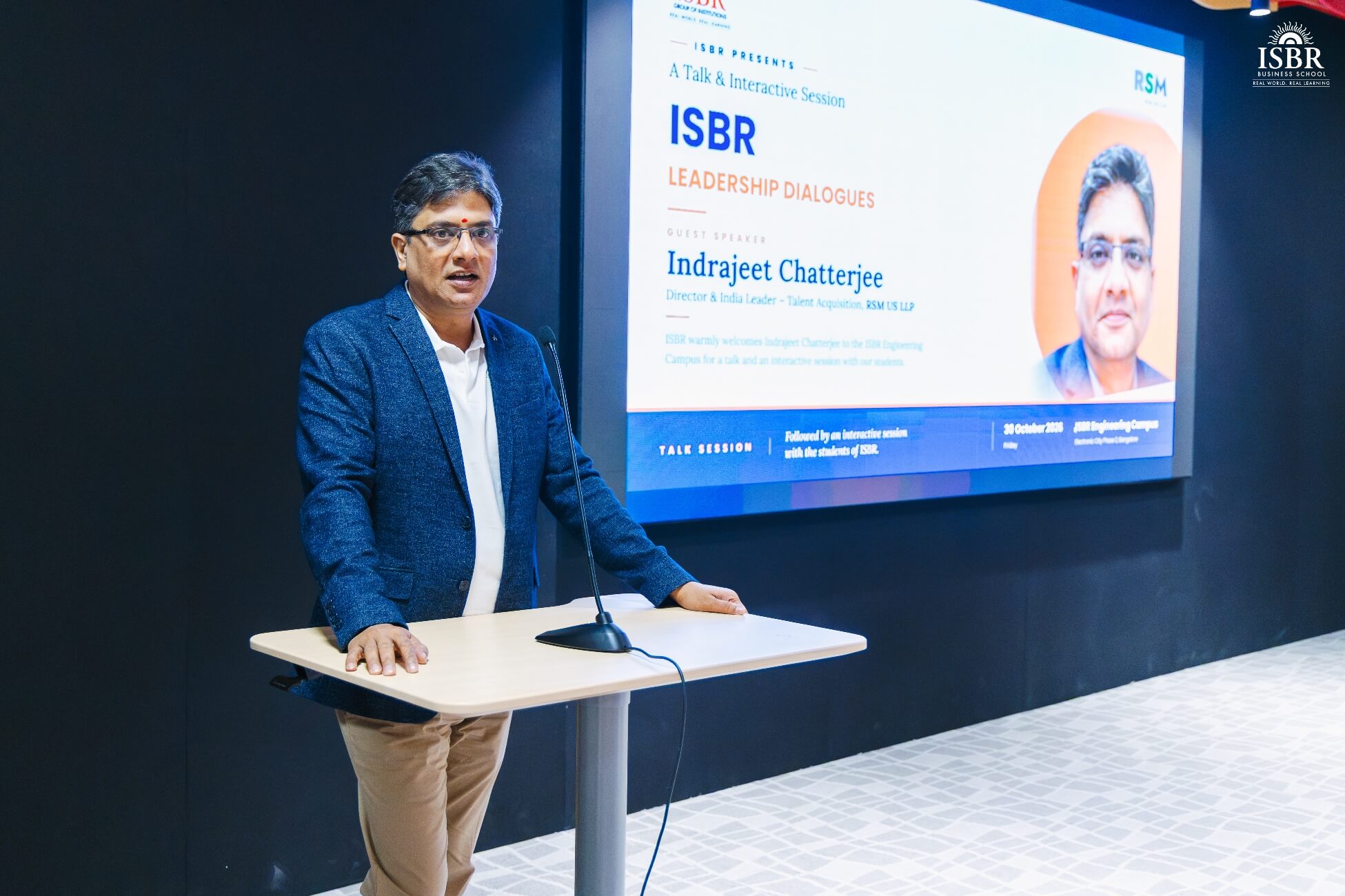
When choosing the right college in the city, check for three specific markers: a curriculum built on multidisciplinary corporate frameworks, a history of consistent placement assistance, and a campus location that permits corporate flight executives to frequently visit for guest masterclasses.
Why ISBR Stands Out as the Premier Choice
If you are looking for a definitive BBA aviation college in Bangalore that effortlessly checks every single box, ISBR deserves to be your top choice. Offered directly from Bangalore University and recognized officially by the Government of Karnataka, ISBR’s 3-year BBA Aviation Management program operates as a premier flagship course.
Situated in the heart of Electronic City, ISBR aligns its entire aviation program with a robust multi-disciplinary competence framework. This means you do not just learn business theories; you develop high-level executive management and leadership skills tailored to act as strategy accelerators in customer-driven global networks.
ISBR’s pedagogical approach is an even mixture of theory, classroom teaching, practical fieldwork, and real-world industrial projects. The coursework touches on every subject imaginable, ranging from general business strategies and project management to very specialized fields such as air traffic management, airline finance, and aircraft maintenance management. Being a joint course of Bangalore University and ISBR, the course provides the best of both worlds for students: theoretical knowledge and networking necessary for landing a job post-graduation.
Conclusion: Is a BBA in Aviation Management Worth It?
If you just want a routine, slow-paced desk job, a standard degree will do. But if you like fast-moving environments, enjoy solving logistical problems, and want to work in a global industry, this course is a great choice.
Looking through the BBA aviation course details shows how much practical operational training you actually get. Choosing a solid BBA aviation college in Bangalore like ISBR puts you right in the middle of the industry, making it much easier to build a rewarding career after graduation.